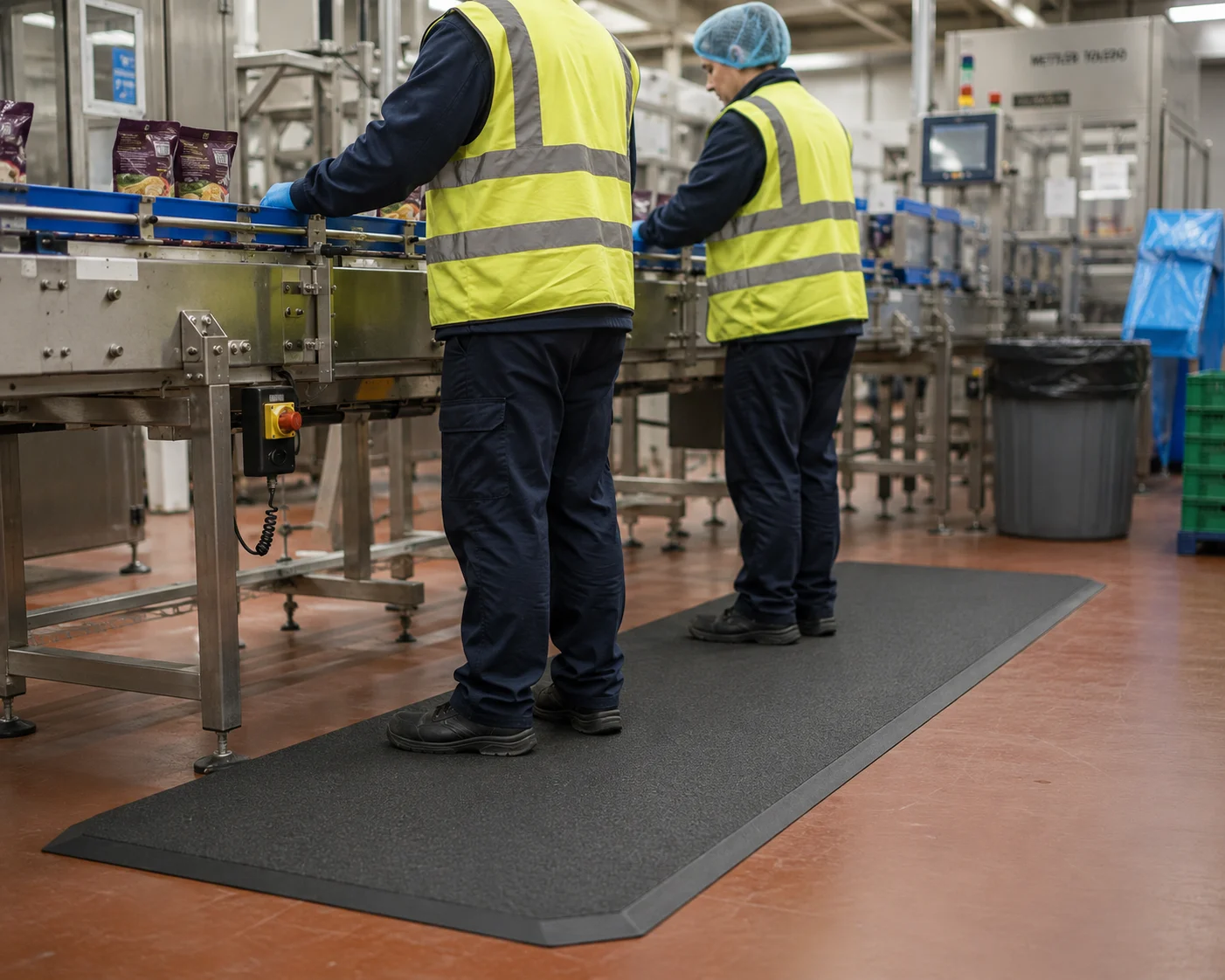
If you spend any real time cooking, prepping, or washing up, the right anti-fatigue kitchen mat can take pressure off your feet, knees and lower back. Hard tile, stone, and slate floors are unforgiving. We compared five kitchen anti-fatigue mats available in the UK on cushioning, hygiene, grip and long-term value so you can choose what actually works.
Why Kitchen Floors Cause Pain
Most kitchens have hard flooring — porcelain tiles, ceramic, slate, stone, or poured concrete. These surfaces look great and are easy to clean, but they offer zero cushioning. When you stand on a hard floor, your body absorbs every impact. Over time, this leads to:
Aching Feet
Plantar fasciitis and general foot pain are common in people who stand on hard kitchen floors regularly. The arch of the foot bears constant pressure with no give from the surface.
Lower Back Pain
Hard floors transmit impact up through your legs and into your spine. If you already have a bad back, standing on tile or stone makes it significantly worse.
Knee and Joint Strain
Knees absorb shock with every shift of weight. On unyielding surfaces, this adds up fast — especially during long cooking sessions or kitchen clean-ups.
General Fatigue
Standing on hard floors forces muscles to work harder to maintain stability. You feel more tired, more quickly, even if you are not doing anything strenuous.
An anti-fatigue mat introduces a cushioned layer between you and the floor. The foam or gel compresses under your weight, absorbing impact and encouraging subtle micro-movements that improve circulation. The difference is immediate and obvious.
What to Look For in a Kitchen Anti-Fatigue Mat
Cushioning Thickness
Aim for 15-20mm of quality foam or gel. Anything under 12mm will not provide meaningful relief. Thin decorative mats may look nice but do very little for comfort. Thickness matters, but material quality matters more — cheap foam flattens quickly.
Antimicrobial Treatment
Kitchens are damp, warm environments where bacteria thrive. If you prepare food near your mat, an antimicrobial treatment inhibits bacterial and mould growth on the surface. This is not essential for every kitchen, but it is worth considering if hygiene is a priority.
Weight and Portability
Kitchen mats need to be moved for mopping and deep cleaning. A mat that is too heavy to lift easily will end up staying put and collecting grime underneath. Look for mats you can comfortably pick up with one hand.
Easy Cleaning
Spills are inevitable in kitchens. Choose a mat with a closed-cell, non-porous surface that wipes clean. Fabric-topped mats absorb liquids and stain. A smooth polyurethane or PVC surface is far more practical.
Non-Slip Backing
Kitchen floors get wet. Your mat must stay firmly in place even when the floor is damp. Look for textured or grippy backing, and check slip-resistance ratings if available. A sliding mat is a safety hazard.
Bevelled Edges
Tapered edges reduce the risk of tripping — especially important in a busy kitchen where you are carrying hot pans and sharp knives. Avoid mats with square-cut edges that curl up over time.
Top 5 Kitchen Anti-Fatigue Mats Compared
#1 M-Lite Antimicrobial
by Ergo Advantage — Quote on request
The M-Lite Antimicrobial is purpose-built for environments where hygiene and comfort both matter. The 20mm polyurethane foam core provides genuine all-day fatigue relief, while the antimicrobial surface treatment inhibits bacterial and mould growth — a real advantage in kitchens where food preparation, splashes, and warmth create the perfect conditions for germs. At 72×102cm, it covers a generous area in front of a worktop, sink, or cooker.
Key Specifications
- Thickness: 20mm
- Size: 72×102cm
- Material: Polyurethane foam (antimicrobial)
- Surface: Non-porous, wipe-clean
- Edges: Bevelled
- Manufacturing: UK distributed
Strengths
- ✓ Antimicrobial treatment — ideal for food prep areas
- ✓ 20mm thick — genuine fatigue relief, not just padding
- ✓ Non-porous surface wipes clean easily
- ✓ Bevelled edges reduce trip risk
- ✓ Generous size covers main standing area
Considerations
- ✗ Higher price than basic kitchen mats
- ✗ Utilitarian appearance — not decorative
Best for: Anyone who spends serious time in the kitchen — home cooks, keen bakers, families, and anyone with existing foot or back pain. The antimicrobial treatment makes it especially suitable for kitchens where food hygiene matters.
#2 M-Lite Pro
by Ergo Advantage — Quote on request
The M-Lite Pro uses the same 20mm polyurethane foam core as its antimicrobial sibling, delivering identical cushioning and fatigue relief. The difference is the absence of the antimicrobial surface treatment, which makes it the more economical pick. If your kitchen mat sits away from direct food preparation — in front of the sink or at an island, for example — you get the same comfort for less.
Strengths
- ✓ Same 20mm foam core as the Antimicrobial
- ✓ Lower price — good budget kitchen option
- ✓ Non-porous, wipe-clean surface
- ✓ Bevelled edges and non-slip backing
Limitations
- ✗ No antimicrobial treatment
- ✗ Same utilitarian look as the Antimicrobial
Best for: Kitchen use away from food prep areas, or for anyone who wants top-tier comfort but does not need the antimicrobial feature. Also a smart choice for utility rooms, workshops, and garages.
#3 GelPro Elite
by GelPro — £80–120 (varies by size)
GelPro is a US brand that has built a strong reputation in the kitchen mat market. The Elite uses a gel core rather than foam, which gives a distinctive soft, cushioned feel. It comes in a wide range of sizes and decorative finishes, making it one of the more aesthetically appealing options. However, availability in the UK can be patchy, and import costs can push prices higher.
Strengths
- ✓ Gel core provides a soft, cushioned feel
- ✓ Wide range of decorative colours and patterns
- ✓ Multiple size options
Limitations
- ✗ Heavier than foam mats — harder to move for cleaning
- ✗ US brand — limited UK availability and longer delivery
- ✗ Gel can feel less supportive than foam over long periods
- ✗ No antimicrobial treatment
Best for: Home cooks who want a mat that looks good in a styled kitchen and are willing to pay more for aesthetics. Better for shorter standing sessions than all-day use.
#4 COBA Orthomat
by COBA Europe — £50–70
COBA is a well-known UK manufacturer of industrial and commercial matting. The Orthomat is their entry-level anti-fatigue option, available in various sizes. At 12mm thick, it is noticeably thinner than the M-Lite range, which limits its fatigue relief for extended standing. However, it is reasonably priced and widely available from UK suppliers.
Strengths
- ✓ Established UK manufacturer
- ✓ Reasonable price point
- ✓ Various sizes available
Limitations
- ✗ Only 12mm thick — less fatigue relief
- ✗ PVC foam may compress faster than polyurethane
- ✗ No antimicrobial treatment
- ✗ Designed more for commercial use — utilitarian look
Best for: A decent mid-range option if you stand in the kitchen for moderate periods. Less suited to all-day use or people with significant back or joint problems.
#5 Generic Kitchen Mats
Various brands — £15–30
The decorative kitchen mats you see in supermarkets and homeware shops. They come in attractive designs — lemons, herbs, geometric patterns — and are marketed as kitchen anti-fatigue mats. Most have a thin foam or rubber backing (5–10mm) with a fabric or printed surface. They are affordable, but they are not genuine anti-fatigue matting.
Strengths
- ✓ Low upfront cost
- ✓ Wide range of decorative designs
- ✓ Easy to find in shops and online
Limitations
- ✗ Too thin (5–10mm) for real fatigue relief
- ✗ Fabric surfaces absorb spills and stain
- ✗ Foam flattens within months
- ✗ No antimicrobial properties
- ✗ Often slip on smooth floors
Best for: Purely decorative use, or if you rarely stand in the kitchen for more than a few minutes. Not recommended if you have foot, knee, or back pain.
Quick Comparison
| Product | Material | Thickness | Size | Hygiene | Price |
|---|---|---|---|---|---|
| M-Lite Antimicrobial | PU foam (antimicrobial) | 20mm | 72x102cm | Antimicrobial | Quote on request |
| M-Lite Pro | Polyurethane foam | 20mm | 72x102cm | Standard | Quote on request |
| GelPro Elite | Gel core | 20mm | Various | Standard | £80–120 |
| COBA Orthomat | PVC foam | 12mm | Various | Standard | £50–70 |
| Generic kitchen mats | Fabric / thin foam | 5–10mm | Various | None | £15–30 |
Standard vs Antimicrobial: Which Do You Need?
Standard Mat (e.g. M-Lite Pro)
A standard polyurethane anti-fatigue mat is perfectly fine in many kitchen situations. Choose a standard mat if:
- → Your mat is positioned away from food preparation areas
- → You wipe it down regularly after use
- → Your kitchen is well-ventilated and not excessively humid
- → You want the more economical option with identical cushioning
Antimicrobial Mat (e.g. M-Lite Antimicrobial)
The antimicrobial treatment adds a layer of protection against bacteria and mould. It makes more sense if:
- → Your mat sits near the worktop, cooker, or chopping area
- → Raw meat, fish, or dairy is handled nearby
- → Your kitchen tends to be warm and humid
- → You have young children or immunocompromised household members
- → You want extra peace of mind for a small additional cost
Both mats use the same 20mm polyurethane foam core and provide identical comfort. The antimicrobial version simply adds surface protection against germs. For most home kitchens, the price difference between the two is modest enough that the antimicrobial version is the safer choice.
Frequently Asked Questions
What is the best anti-fatigue mat for a kitchen?
How thick should a kitchen anti-fatigue mat be?
Do kitchen anti-fatigue mats harbour bacteria?
Can I put a kitchen anti-fatigue mat in the washing machine?
Are gel mats better than foam mats for kitchens?
Will an anti-fatigue mat slip on kitchen tiles?
How long does a kitchen anti-fatigue mat last?
Related Guides
Do Kitchen Anti-Fatigue Mats Actually Work?
The evidence behind the comfort claims, before you pick a mat.
Anti-Fatigue Matting UK
See the wider commercial and industrial anti-fatigue options behind these kitchen-style recommendations.
Anti-Fatigue Mat vs Gel Mat
Foam or gel? Compare the two main types of kitchen comfort matting.
M-Lite vs Cheap Mats
Is a premium mat worth it? We break down the real cost difference.
Best Standing Desk Mats UK 2026
Standing at the counter all day? The same comfort logic applies at a desk.