Industrial Matting Glossary
Anti-fatigue matting
Definition
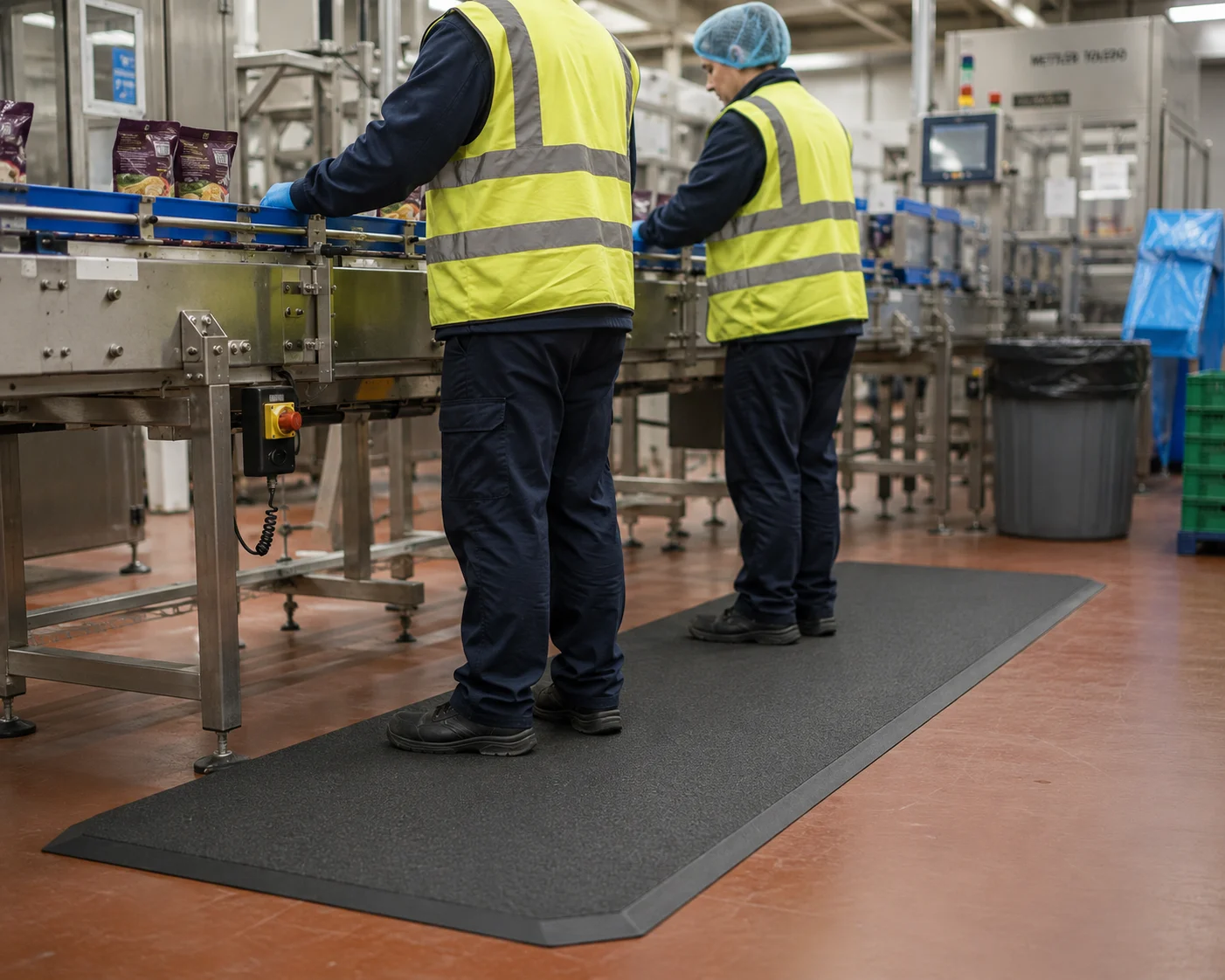
Cushioned matting designed to reduce leg and lower back strain for people standing for long periods. The surface encourages subtle muscle movement to keep circulation active.
Also known as: ergonomic matting
Why it matters
- Cushioning reduces pressure points during long shifts.
- Surface textures can add slip resistance without losing comfort.
- Thickness and compound should match operator weight and traffic.
Typical uses
- Assembly lines and packing benches.
- Quality inspection and lab stations.
- Standing workstations in production cells.
Documents to request
- Confirm thickness and surface texture options.
- Ask for slip and fire documentation if hazards exist.
- Request RAMS and installation guidance for the area.
Related resources for Anti-fatigue matting
Compare Anti-fatigue matting suppliers
Compare all suppliersSide-by-side vs 17 matting suppliers
- Maximum Matting vs COBA Europe
- Maximum Matting vs Wearwell
- Maximum Matting vs Ecotile Flooring
- Maximum Matting vs Duramat UK
- Maximum Matting vs Bondline Electronics
- Maximum Matting vs First Mats
- Maximum Matting vs Mats Nationwide
- Maximum Matting vs Mats4U
- Maximum Matting vs BiGDUG
- Maximum Matting vs Jaymart
- Maximum Matting vs Plastex
- Maximum Matting vs Kleen-Tex
- Maximum Matting vs NoTrax
- Maximum Matting vs WellnessMats
- Maximum Matting vs KAISER+KRAFT
- Maximum Matting vs Ergomat
- Maximum Matting vs Ergo Deck
Need help specifying the right matting?
Share your hazards, shift length, contaminants and traffic types — we'll recommend the right M5 surface, documentation and layout, and send a tailored spec pack.
Anti-fatigue matting — FAQs
How does anti-fatigue matting reduce fatigue?
Can anti-fatigue matting handle wheeled traffic?
What information helps specify anti-fatigue matting?
Explore more type terms
Type
Anti-slip matting
Matting engineered for higher friction underfoot in wet or oily areas. Textured surfaces, grit, or raised patterns improve traction.
Type
Drainage matting
Matting with channels or holes that allow liquids and debris to pass through, keeping the walking surface drier.
Type
ESD matting
Flooring designed to dissipate static electricity through a controlled resistance path to ground. Used in EPAs and electronics assembly areas.
Type
Fire-resistant matting
Matting formulated to resist ignition and slow flame spread in areas exposed to heat, sparks, or hot work.
Planning a larger matting install?
Tell us the floor, the hazard and the area. We'll book a free site visit or send free samples, then come back with a specified layout, lead time and quote. Trade enquiries welcome.